A place of practice in Thung Krabue, Yan Ta Khao district, Trang province · founded by Mae Chee Narawan Kulathornchutiphas on 20 July 1986 — four decades of Dhamma practice toward liberation.
Moved by deep gratitude toward her hometown, Mae Chee Narawan Kulathornchutiphas founded the Vipassana Mental Development Center, formally opening it as a place of Dhamma practice on 20 July 1986 — the anniversary of her own birth.
The center stands on eleven rai of her family’s land in Thung Krabue, Yan Ta Khao district, Trang province. Her pure intention was to create a place of practice that would bring the Buddha’s teaching as a refuge to the people of her birthplace, and serve everyone who seeks the Dhamma for the sake of liberation.
Formally opened
1986
Formally opened
On the founder’s family land
11 rai
On the founder’s family land
Pioneering founders
4 women
Pioneering founders
Celebrated in 2026
40 years
Celebrated in 2026
The pioneer years — grass fields and storm lanterns
In 1985, before the center formally opened, the four founders — all of them women — began simply by inviting one another to practise, surrounded by a community that was largely Thai Muslim. The site was still an open field of cogon grass, with only small, newly planted rubber trees that offered no shelter from sun or rain.
Under the scorching midday sun they cleared the land together — for safety from wild animals, and to make the place conducive to practice. They took turns cooking to sustain each day, while Mae Chee Narawan and her companions pioneered the grounds on their own, building a simple lean-to shelter against sun and rain. At night, each withdrew to practise by the light of storm lanterns, for electricity had not yet reached the area.
The cogon-grass field of the pioneer years, 1985 · before electricity reached the land
The cogon-grass field of the pioneer years, 1985 · before electricity reached the land
Though the center was not far from the main road, in the rainy season the journey out could take an hour: the track was rutted and potholed, and in the rains it turned to mud that no car could pass. Trips to town — including carrying in provisions for each day’s cooking — meant wading through mud on foot, and the white robes of the nuns and practitioners were inevitably stained with it.
However great the hardship, the pioneers never wavered. They pressed on in earnest practice with all their strength, giving their own funds and their own labour to clear and build up the Vipassana Mental Development Center.
“Than Mae Kru”
For the immense contribution of Mae Chee Narawan Kulathornchutiphas — her sacrifice and endurance through hardship for the benefit of all who seek the truth — her students together came to address her, with the highest love and reverence, as “Than Mae Kru”: the revered Mother Teacher.
To her students, she is the teacher who points the way in Dhamma — like a mother who gives every practitioner their birth in the Dhamma.— the meaning of “Than Mae Kru” in the hearts of her students
Four decades of faith
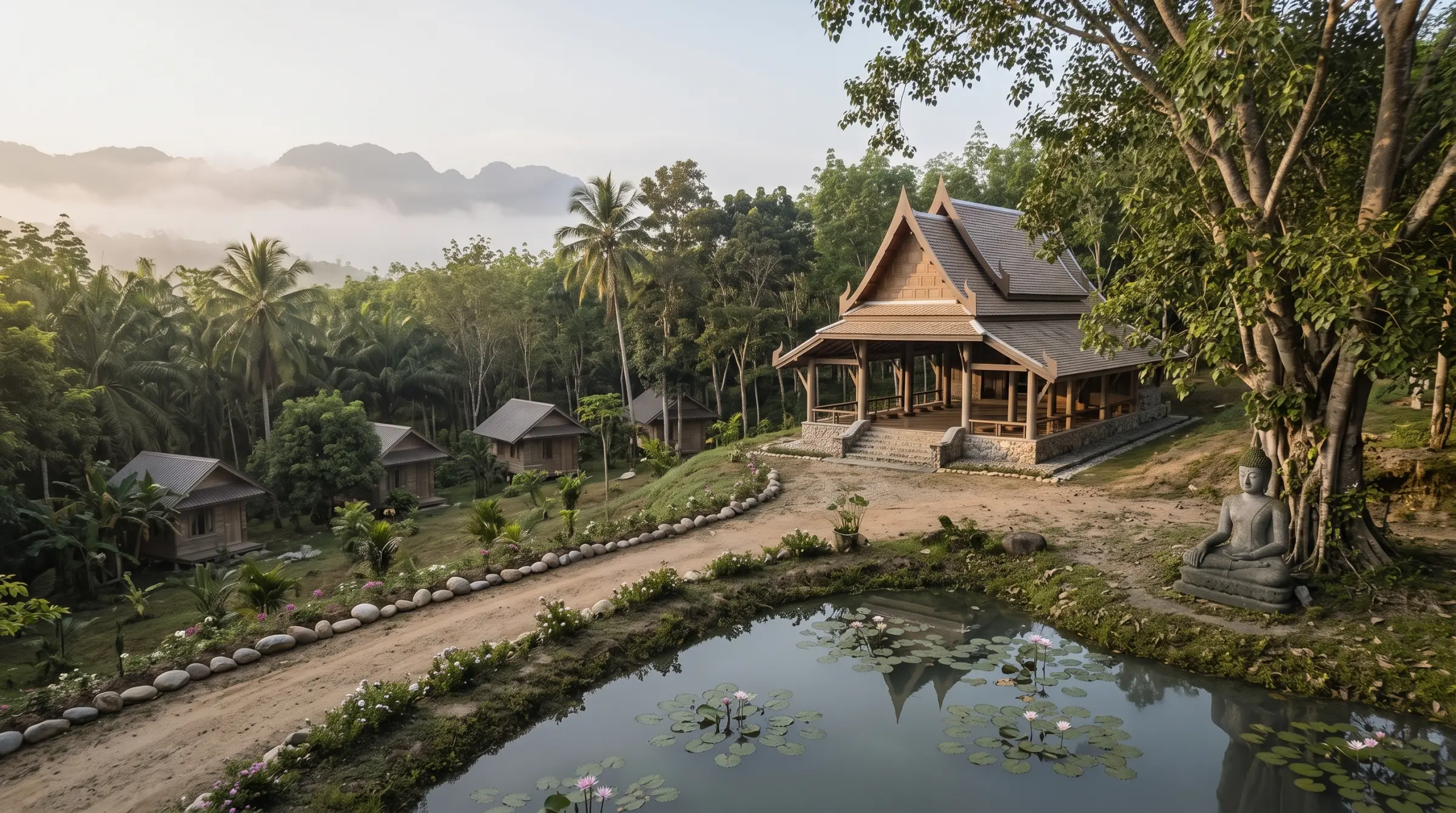
In 2026 the Vipassana Mental Development Center marks its fortieth year. It has come through the hardship and scarcity of its founding era on the firm resolve and unshakeable faith of Than Mae Kru, together with the dedication of students who, generation after generation, have joined hands to develop the center and carry her aspiration forward. Today the center is known to all for its conduciveness to practice — its beauty, its cleanliness, its comfort — with no trace left of the hardships of the past.
The center today · conducive to practice, four decades on
The center today · conducive to practice, four decades on
Today, ever more people travel to practise at the center — seekers of the Dhamma from Thailand and abroad, who come continually for meditation training.
Founded the center in 1986 on her family’s land in her native Trang. For her sacrifice and endurance through hardship for the benefit of all who seek the truth, her students reverently call her “Than Mae Kru” — the teacher who is like a mother giving birth in the Dhamma.
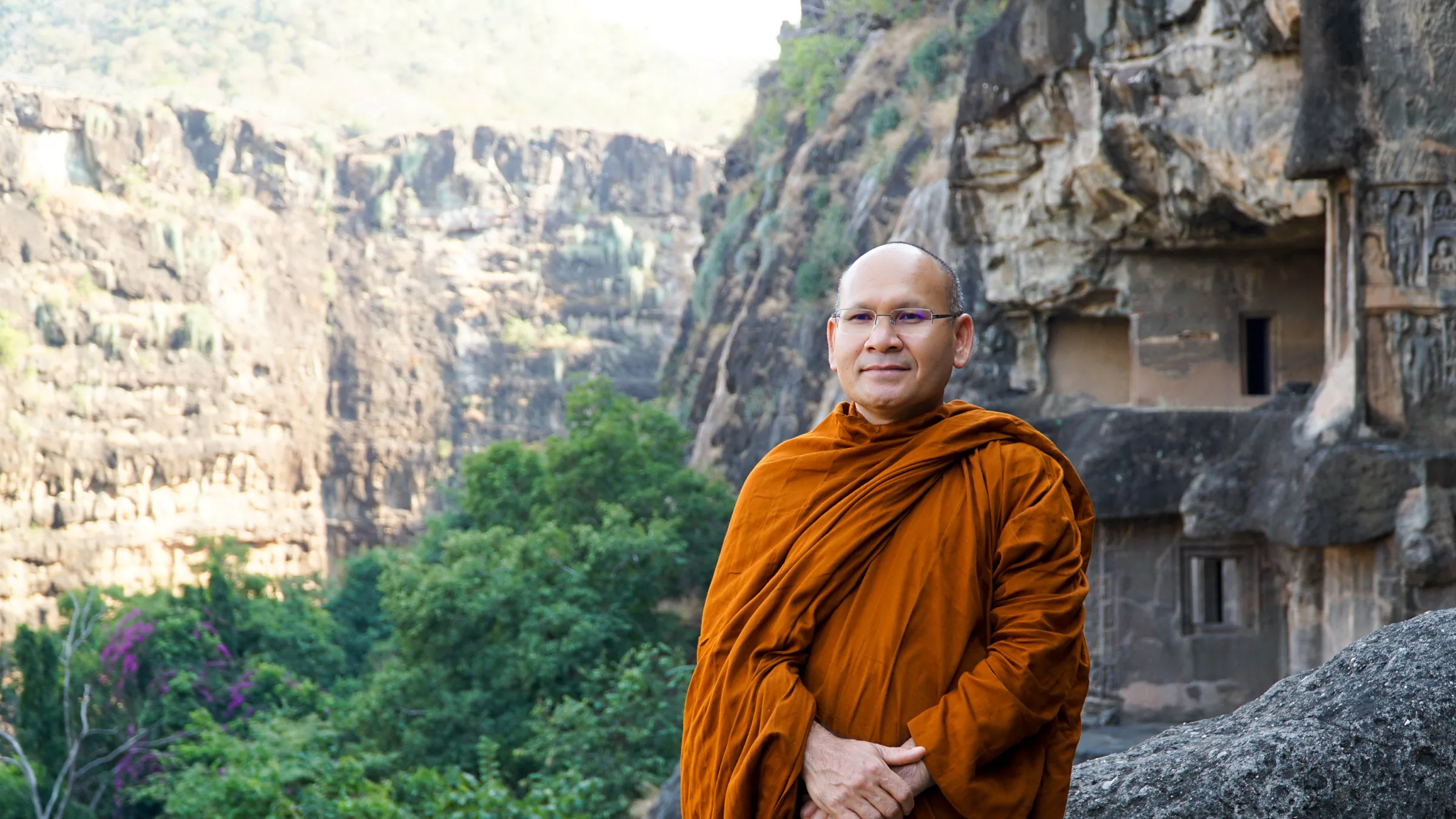
Ordained in 1990, he took up the wandering life in search of the truth until he met Than Mae Kru and trained here in vipassanā along the path of the four foundations of mindfulness. In time she gave him her own teaching chair, entrusting him with guiding practitioners. He was appointed Phra Khru Winaithon in 2024, and received an honorary doctorate in vipassanā meditation in 2025.